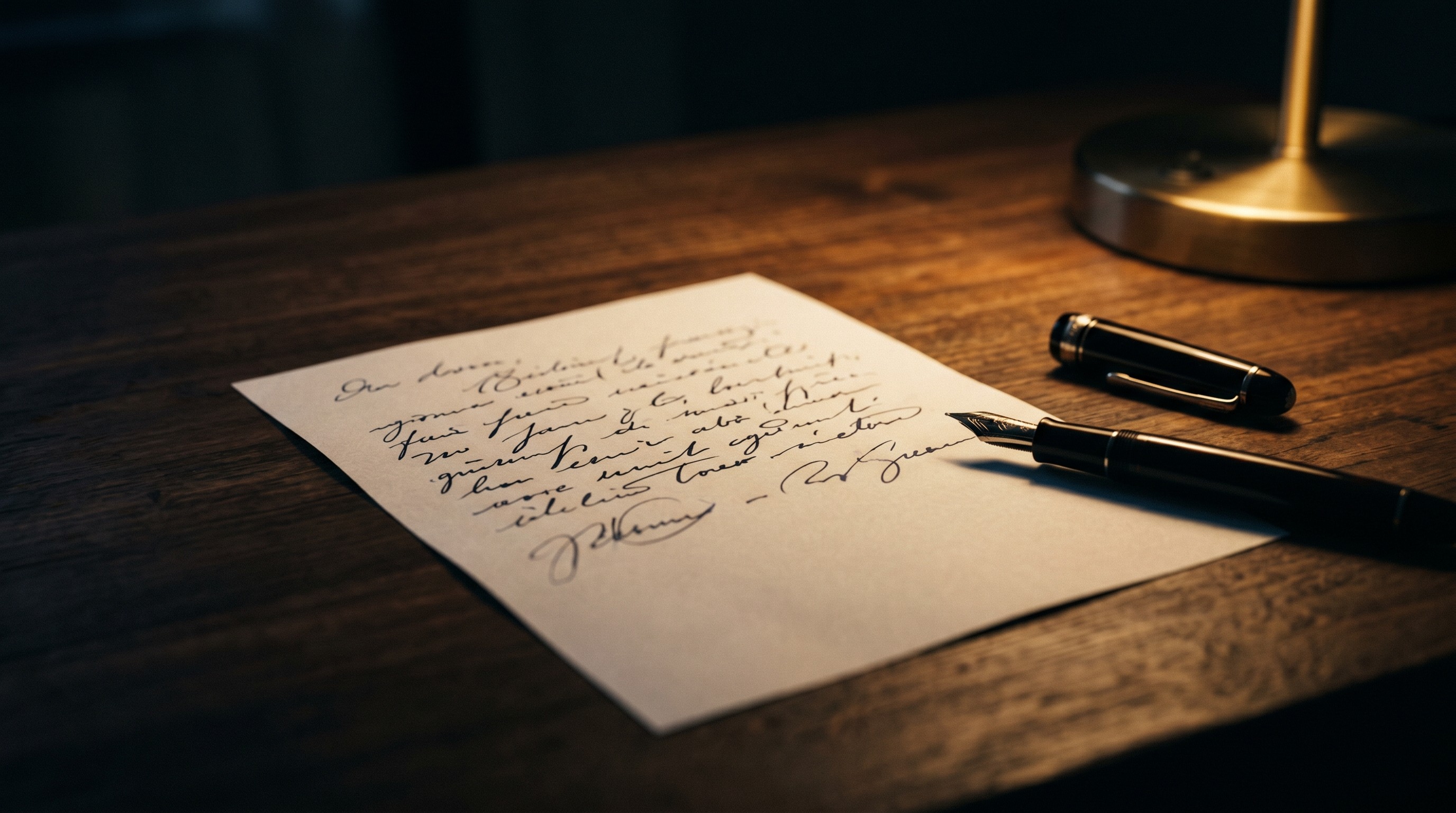
There is a particular kind of forgetting that doesn't announce itself. It arrives quietly, weeks or months after something happened, when someone asks you about a play you loved or a book that changed you — and you find the name has slipped, the details have blurred, the feeling remains but the shape of it has gone.
It is not the forgetting of age or illness. It is the forgetting of a life lived too quickly to hold onto.
We live in an age of extraordinary cultural richness. More plays, more films, more books, more concerts, more conversations, more places to eat, more things to read and watch and attend than any generation before us has ever had access to.
And yet most of it slips through.
Not because it didn't matter. Because the pace of modern life leaves no natural pause in which things can be held. One experience follows another before the previous one has been given space to settle. A year passes and its shape is gone. You know you did things — important things, meaningful things — but when someone asks you to name them, fewer come to mind than you'd expect.
The problem isn't that we experience too little. It's that we have nowhere for what we experience to land.
We've tried photographs. Most of us now carry an archive of thousands — concerts and dinners and performances captured in the moment, almost never looked at again. The photograph preserves the image but not the feeling, not the reason it mattered, not the name of the play or the thought you had walking out.
We've tried notes apps. Fragments scattered across different tools, untagged, unsearchable, disconnected from anything that would make them findable later. A note that says “good — recommend” with no indication of what it was about.
We've tried social media. Posting something publicly is a kind of record, but it isn't a personal one. It's a performance, shaped for an audience, curated for reaction. The experience gets translated into what's shareable rather than what was true. It serves everyone else's attention before it serves your own memory.
None of these were built for this. They were built for other jobs, and we've pressed them into service because nothing better existed.
Every experience leaves an imprint. The question is whether we give those imprints a place to live.
We believe that the experiences we choose to attend to — the plays, films, books, performances, meals, conversations, and moments that shape us — are how we become who we are. Not the experiences that happened to us, but the ones we showed up for. The ones we chose.
And we believe that remembering them properly is not a luxury. It is how we keep the thread of a life.
Impryntd is a single, considered place for the experiences worth keeping.
Add a play you've seen, a book you've finished, a meal you want to remember. Capture a rating, a note, a photograph. The details that would otherwise disappear — the venue, the date, the company, the poster, what the critics thought — are gathered quietly alongside your own record. Look back by month, by city, by category, by year. Share with the people you trust, or keep it entirely for yourself.
The experiences you imprint stay yours. In one place. For as long as you want them.
What Impryntd is not
- Not a performance for an audience.
- Not a checklist of consumption.
- Not a daily diary of moods and meals.
- Not designed to compete for your attention.
Just a home for the experiences worth keeping.
If any of this resonates — if you've felt the particular frustration of a meaningful year slipping through without a record — you're exactly who we're building this for.
Join the waitlist. Be among the first to imprint.